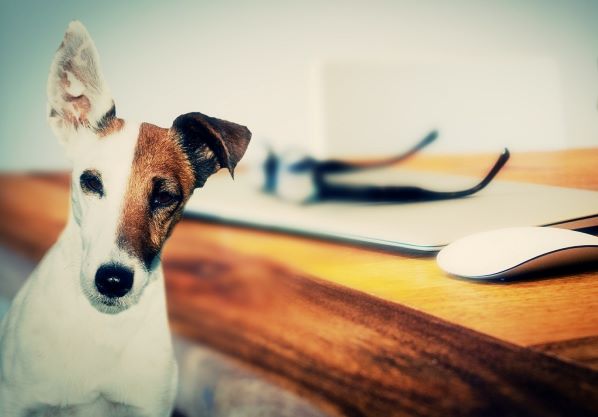
 Writers, did you ever wonder what those editors were saying about you as they sat around the gruel pot fighting over the crusty bits? Well, I was kicking back at the off-leash doggy park the other day, and I noticed a distinctly familiar topic of conversation: relationship problems and how to deal with them. This post is to give writers and editors an idea of how the other half thinks.
The ideal relationship between a writer and an editor is when either one of them can say pretty well whatever they want about the manuscript, and the other will react to the comment as if it was a comment on the manuscript. And only the manuscript. I’m sure you know what I mean.
This does not always happen. Let’s look at a few points along the spectrum of interaction. If you’re an editor, just enjoy this. If you’re a writer, try to figure out which of these apply to you. Both of you think about how it affects your relationship. (For this post, the generic masculine pronoun has been used to protect the guilty.) Continue reading “6 Types of Writers and How to Edit Them”
 My main difficulty when I switched from writing plays to novels was my use of pauses. It took me a long time to figure out that the time sense of a person conversing in real life or watching a play is very different from the time sense of someone reading prose. And that has repercussions in novel writing and the use of punctuation.
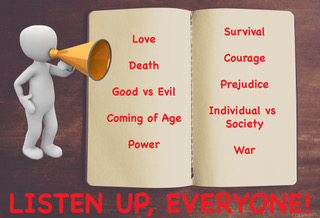 Okay, everyone knows that great works of literature have important themes. “Red Badge of Courage,” “Les Miserables,” “Harry Potter and the Philosopher’s Stone.” You know the ones. But what about your Space Opera?