
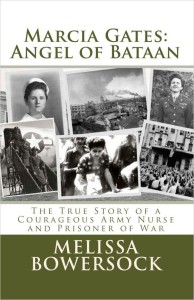
 Recently our own Big Al wrote a post about non-fiction and how it is largely missing in the annals of IU. True enough, most of our emphasis here is on fiction. Some of us, however, have waded into the cool waters of non-fiction, and I for one found the experience totally different than crafting a novel.
One thing I’ve learned is that fiction and non-fiction have very different roles. Broadly speaking, fiction’s purpose is to provide entertainment while non-fiction’s purpose is to provide information. These two things are not mutually exclusive, of course. If you read the novel Congo, you no doubt learned quite a bit about extracting data from digital video. By the same token, a non-fiction book like American Sniper is certainly entertaining in a dramatic, thought-provoking way.
Non-fiction, like fiction, can be broken down into several sub-genres. Continue reading “When a Novelist Writes Non-Fiction”
 Recently I was beta-reading a book for another author and found an annoying recurrence of what I consider to be a newbie mistake. The book was fiction, telling the story in omniscient third person as if the reader were a fly on the wall watching the drama unfold. Good enough as far as it went, but then suddenly, with a single word, it catapulted me right out of the telling.
  “Texas has a lot of electrical votes.” –Yogi Berra
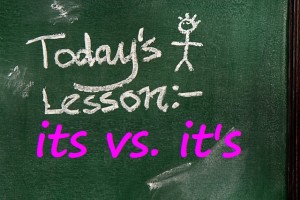 I first began to notice it many years ago. Some people had trouble with its and it’s, a common confusion. But then it began to spread, like a cancer, across Facebook and Twitter, those bastions of common usage and colloquialism. When it began showing up in writers’ forums, I knew it was reaching epic proportions. The virulent, creeping Disease’s of the Apostrophe’s.