
 Join a discussion with self-published writers and you’ll hear strong opinions on what constitutes proper formatting for both paperbacks and eBooks. One discussion that comes up on various Kindle fora is what, exactly, to do with the first paragraph in a chapter.
There are no hard and fast rules, but there are some strong recommendations. The consensus is that for both eBooks and paperbacks, the first paragraph in a chapter shouldn’t be indented. Because I’m a curious person, I pulled five paperbacks off my shelf to see how Stephen King, Billie Letts, Barbara Kingsolver, John Steinbeck, and Larry McMurtry handled first paragraphs. Okay, not them, but their publishing and formatting teams. None had indented first paragraphs, and four of the five used drop caps. Continue reading “Drop Caps, Indents, and Other Formatting Tricks in Word”
 Pirate websites are among the banes of the indie author – and of traditionally-published authors, as well. But the Authors Guild, of all organizations, has suggested a fix.
 This is an ongoing series about BigAl’s first experience writing a book. Join him as he flies by the seat of his pants and figures things out as he goes. For a more complete explanation about the book and this series of posts, you can
 It’s really nice to have support when I write. My entire body supports me. My spine keeps me upright in my chair. My butt anchors me there (sometimes too long), and of course my hands and eyes connect me to my computer via the keyboard, mouse, and monitor. Obviously, I could not write without the aid of my body, but sometimes it takes that support too far and ends up causing me trouble with typos. How so?
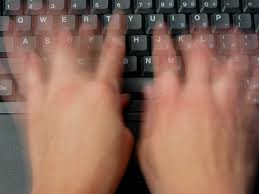 First it’s my fingers. They’re very helpful. I should provide a little backstory and say that I learned to touch type in high school — home row, QWERTY, and all that. I never have to look at the keyboard to type, just keep my eyes trained on the screen and go. Because of that, I type fast, and my fingers know whole words after so much repetition. I rarely have to think about typing H-E-A-D, I just think about head and my fingers do the rest.