
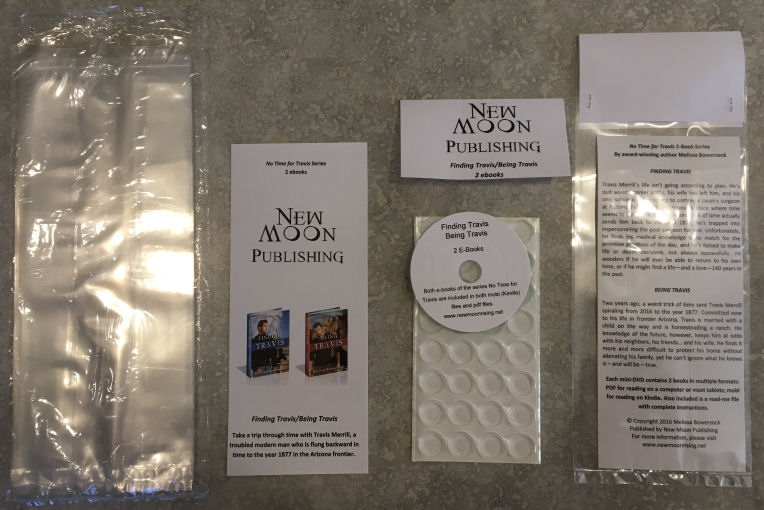
Most of us, I think, participate in as many book fairs in our local area as we can. I’ve written before about how to make the most of a book fair appearance, but recently I’ve forayed into new (to me) territory. I decided to have some eBooks on hand to sell.
How the heck do you sell an eBook in person?
I considered a few things. First of all, I wanted a physical product to hand to a customer. Taking their money and then just emailing something or sending it over in any number of wireless ways just seemed… less personal. I wanted a real product that was stylish, easy to understand and upload, and of course a great book. I thought about using inexpensive thumb drives, but even the cheapest ones added more overhead than I cared to absorb, so I finally settled on mini-DVD discs. These come in spindles at about $0.50 each. My total package (see photo above) includes: Continue reading “Selling eBooks at Book Fairs”
 If I offered you a raise of between 5% and 6% for spending a trivial amount of extra time (we’re talking only seconds) you wouldn’t turn it down, would you? I didn’t think so. Yet that’s exactly what an author who isn’t setup as an Amazon Associate and using proper links when linking to their books on Amazon from their websites, Facebook pages, and elsewhere is doing. Amazon has made a few changes in the associates program over the years. Some of those changes haven’t been so good (they’ve dropped the percentage commission an associate gets) but some have been good (it’s easier than ever to get and use associate links). This post will walk you through the absolute basics, but it will increase the amount you make for every copy of your book you personally sell from your website through Amazon. If you’re going to bother putting links to your books on your website, why not grab a few percent more when they get clicked on?
  I am going to let you in on a well-guarded secret. Grammar was not invented to give your Grade 10 English teacher a chance to make your life miserable. It was created to ensure sentences say what we mean them to. And word order is one of the basic tools.
 One of the great things about writing multiple books is that readers have several points of entry from which to discover your work. One of the pain in the rear things about having multiple books is that each time you publish a new book, you have to update all the back matter for every other book you have published.