
 He reclined on his couch, sore and tired, eyes drawn to the soft undulations of the tree beside the window. His mind was cobwebbed and dusty. His bed was calling him. But he had a blog post to write. He could feel it flitting behind his memories…hiding in the shadow of his regrets and triumphs.
Category: Staff Articles
Writing advice and insights from the staff of Indies Unlimited.
Getting It Right: Throwing a Right Part 2
[This is part 2 of a two part “Getting it Right” series by author and martial arts instructor Mark Jacobs. This series is aimed at helping authors understand and add meaningful and convincing detail in writing fight scenes. Part 1 can be found here.]
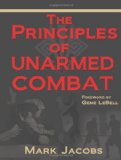 Another fallacy is that a trained martial artist can kill an opponent with a single blow to the heart. Though I’ve previously written about my enjoyment of the martial arts action/adventure novels by author Eric Van Lustbader, and have even praised some of his written fight scenes, when he starts describing the deadly “heart kite” strike, he strays into the realm of fantasy. Yes, in rare instances, people do die from blows to the chest that interrupt the heart rhythm – it’s occasionally happened in little league baseball games when fielders are hit with a line drive – but this is essentially a million to one shot that could never be done intentionally by a fighter.
Even more ludicrous is the concept of a “delayed death touch,” a strike that can be timed to kill a person at a later date. Again, a person might receive an injury during the course of a fight that later causes him to fall over dead but this is sheer bad luck and not something anyone can intentionally do to another person.
Besides technique fallacies, the second major category of mistakes seen in this area are the simple informational/factual errors that authors commonly make when writing about the martial arts. Years ago, it was common to refer to “the judo chop.” But anyone who bothers to do a little bit of research will quickly discover judo is a wrestling style and has no “chop.” That is a karate technique, where it is more commonly known as a “knifehand” or, in Japanese, as a “shuto.” Continue reading “Getting It Right: Throwing a Right Part 2”
A VOICE IN THE WILDERNESS

As I mentioned last time, I have found useful writing tips to be few and far between. This is, to me, one of the most powerful things you can use in creating fiction, but it’s subtle and has no real nuts/bolts application. But just being aware of it helps you when nothing else does. The term is “narrative voice”.
I first heard it in school from Jack Cady, a very talented short story writer who taught writing and science fiction in the Engineering department. Oddly, two weeks later I was sitting in a bar just off campus with Ken Kesey, and he said exactly the same thing. So I took it to heart.
It’s a vague and slippery concept as writing tips go, closer to psychology or spirituality than to medicine or exercise. But you should be aware of it: just keep that awareness a little unfocused. Narrative voice is, in Cady’s words, the way your story wants to tell itself. It’s way more than a point of view or style or dialect or mode or any of that, though all of those are elements in it. You pick up a children’s book about a kid looking for a lost friend and read it, it’s telling itself in a certain way that fits the story. Then you pick up a noir detective story about a guy looking for a lost friend and it tells itself in a very different way. Continue reading “A VOICE IN THE WILDERNESS”
Blocking Writer’s Block – Encore

[This is an encore presentation of JD Mader’s post. Please tune in on Thursday for JD’s victorious return.]
I want to talk for a second about how to deal with writer’s block – don’t. Writer’s block is a myth. It is a psych-out. I have been writing for half my life and I have taught enough writing workshops to honestly believe that writer’s block does not exist…unless you let it exist.
Let me qualify that a bit. There are times when I am blocked on a certain piece, certainly. But that doesn’t mean I can’t write. Writer’s block is fear, pure and simple. And it is easy to let that fear dominate you. But it is easy to avoid, too.
I write every day. Usually around 500 words. A lot more lately. There is never a day when I ‘can’t write’, because I don’t try to force it. If I am working on a novel and I feel jammed up, I write a story. If I can’t think of a story, I look around me…I start describing something. Usually, that leads to something. Sometimes it leads to 500 words of description. So what? Continue reading “Blocking Writer’s Block – Encore”