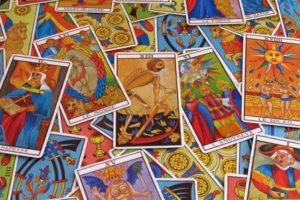
 Everything old is new again, if you wait long enough. Every now and then, I run across an author on the internet who says, “I just had an amazing idea! I’m going to use Tarot cards in my next story! I bet nobody’s ever done that before!”
Um, well, actually, lots of people have. Goodreads even has a list of books in which a Tarot reading figures in the plot. And that list is hardly exhaustive. I can think of two books published in the late 1960s whose authors used Tarot, or a variation on Tarot, as a plot device. One is Samuel R. Delany’s Nova, in which the main character, a member of a spaceship crew, palms the Sun card so that a crucial reading cannot be finished – thereby jeopardizing the ship’s mission. The other is actually a series: Roger Zelazny’s Amber novels, in which the characters correspond to certain cards in a Tarot deck. Continue reading “Writing and the Tarot”
 Fiction authors get to play with all sorts of fun things that our English teachers hardly mentioned. One of those things is italics. Oh, sure, you were supposed to put book titles and stuff in italics when you created that bibliography for your term paper the morning you were supposed to turn it in. But italics are good for more than just entries in a bibliography.
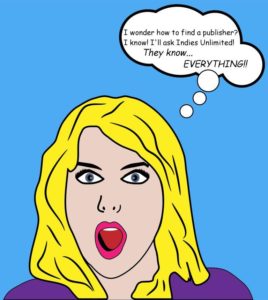 We get lots of email here at IU. Sometimes we get kudos (we like those a lot!). Sometimes we get questions we can answer. We love those, because we are here to help people achieve their dreams of being published.
 As indie authors, we have a wealth of types of marketing and promotional opportunities available to us. However, some types aren’t as effective as others, and some are more effective when you’re farther along in your career. As a newbie, where should you concentrate your efforts? As a more seasoned indie, what will boost you to the next level of visibility and sales?