
 I’m not a lawyer, blah, blah, blah. And while marginally about copyright, this post is really more about common courtesy as well as common sense which someone (Wikipedia claims Voltaire) says isn’t so common. With a hat tip to Voltaire, I sometimes think common courtesy isn’t so common either. Maybe I should explain.
From a strictly legal sense, at least under US law, when you create a work of the kind covered under copyright law, you immediately have a copyright. While most of you think of this in terms of books and short stories, some of my musician friends are thinking in terms of recorded performances and lyrics to songs. Other artists think in terms of other output whether Kat’s photographs (don’t be using those without her permission), or the political cartoon in the Sunday paper, the same concept applies. Continue reading “It’s Still Copyrighted, Knucklehead”
 Recently I’ve learned about a new (to me) term: catfishing. It means someone pretending to be what they are not. In terms of selling books on the Internet, this basically boils down to someone posing as an expert in a given field, then writing short, pithy eBooks using information easily and freely accessible on the Internet (think Wikipedia) and then passing it off as a definitive guide on Amazon.
 I’ve had to ask myself a question recently: why on earth do I bother reviewing books? Actually, I know why I started to … it coincided with the purchase of my Kindle. I fancied an anthology of my opinions and what I thought of all the books I read on it because I thought the advent of digital books was quite a Big Thing. So, wait … let me rephrase that: the behaviour of authors has made me ask myself the question.
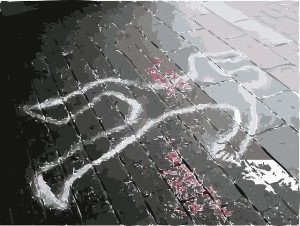 At the October meeting of the Maryland Writers Association (Howard County), John L. French, a crime scene supervisor for the Baltimore City Police Department, offered writers some tips on making their fictional crime investigations more realistic.