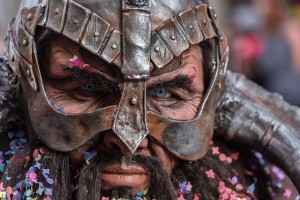
 At a recent conference for fantasy writers, I attended a couple of panels on the subject of the quest. They reminded me that a quest is also a “hero’s journey” – a story structure used in myths and legends around the world, and explained by Joseph Campbell in his book The Hero with a Thousand Faces.
The structure is used extensively in science fiction and fantasy – Lord of the Rings and Star Wars are prime examples – but it shows up in lots of other types of stories, too. Any time a protagonist goes out to find something and comes back wiser for it (or not), you’re seeing a hero’s journey. Continue reading “Writing the Hero’s Journey”
 The idea of formulas in writing always makes my nose wrinkle. Because to me, formula means repetition…and repetition in writing could very well lead to boredom. Have you ever had that? Followed an author you’ve loved for years only to find that by their tenth or fifteenth book you can finish it for them, because you already know how they roll and what they’re going to do with their characters?
 I would guess that most readers don’t really want to analyze the stories they read; they just want to sink into them and enjoy them. I don’t know anyone who deliberately chooses a book based on whether it’s a plot-based story or a character-based story. So what’s the difference and why does it matter?
  Over Christmas, my husband and I were indulging in one of our more recent traditions, which is watching the Trans Siberian Orchestra’s DVD The Ghosts of Christmas Eve. If you’re not familiar with TSO, they’re a bit of a brain-stretcher. Their music is essentially heavy metal, but they are backed by a full symphonic orchestra. They are not the kind of band I would normally gravitate toward, but their DVD production was an instant hit with both of us.