
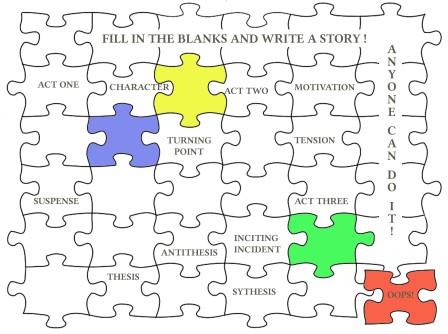
 The structure of every story follows the pattern of the average human emotional experience. That pattern is the same, whether it’s a first kiss, eating a chocolate bar, having sex, or reading a full-length novel. Hollywood scriptwriters have found this pattern, follow it, and often make great heaps of money for their producers by doing so.
But how does this help the novel writer? We’re all much more “seat of the pants,” aren’t we? Creative, innovative, never following the crowd? Well, yes, we all have an intuitive grasp of the idea, or we wouldn’t be writers. But my experience is that a formula helps you most when you discover you’ve screwed up. Be as creative as you want, but when you finish your first draft and discover it’s flat, boring, and takes too long to get anywhere, what do you do? You go to the formula to see what you missed. Because it will be there.
My favourite crutch at times like that is Continue reading “Story Structure: All a Novelist Needs to Know”
 One thing I think most of us writers aspire to is being able to surprise our readers. After all, if the reader knows from page one what the outcome will be — boy gets the girl and they live happily ever after — that doesn’t make for a terribly interesting or suspenseful book. On the other hand, I believe we owe it to our readers to not blindside them. What I mean by that is throwing in a curve ball that has no relation to anything else in the book. Somewhere in there is a happy medium where the reader can be surprised, shocked, maybe delighted by the twists in the plot, but when they think back, they can see the germination of that plot twist. It was there all the time, just under the radar. It fits and it makes sense.
 At a recent conference for fantasy writers, I attended a couple of panels on the subject of the quest. They reminded me that a quest is also a “
 I was moaning to my daughter Kat earlier tonight about how I needed to write this post, but I had no idea what to write about. “The 14th Street sinkhole,” she replied.